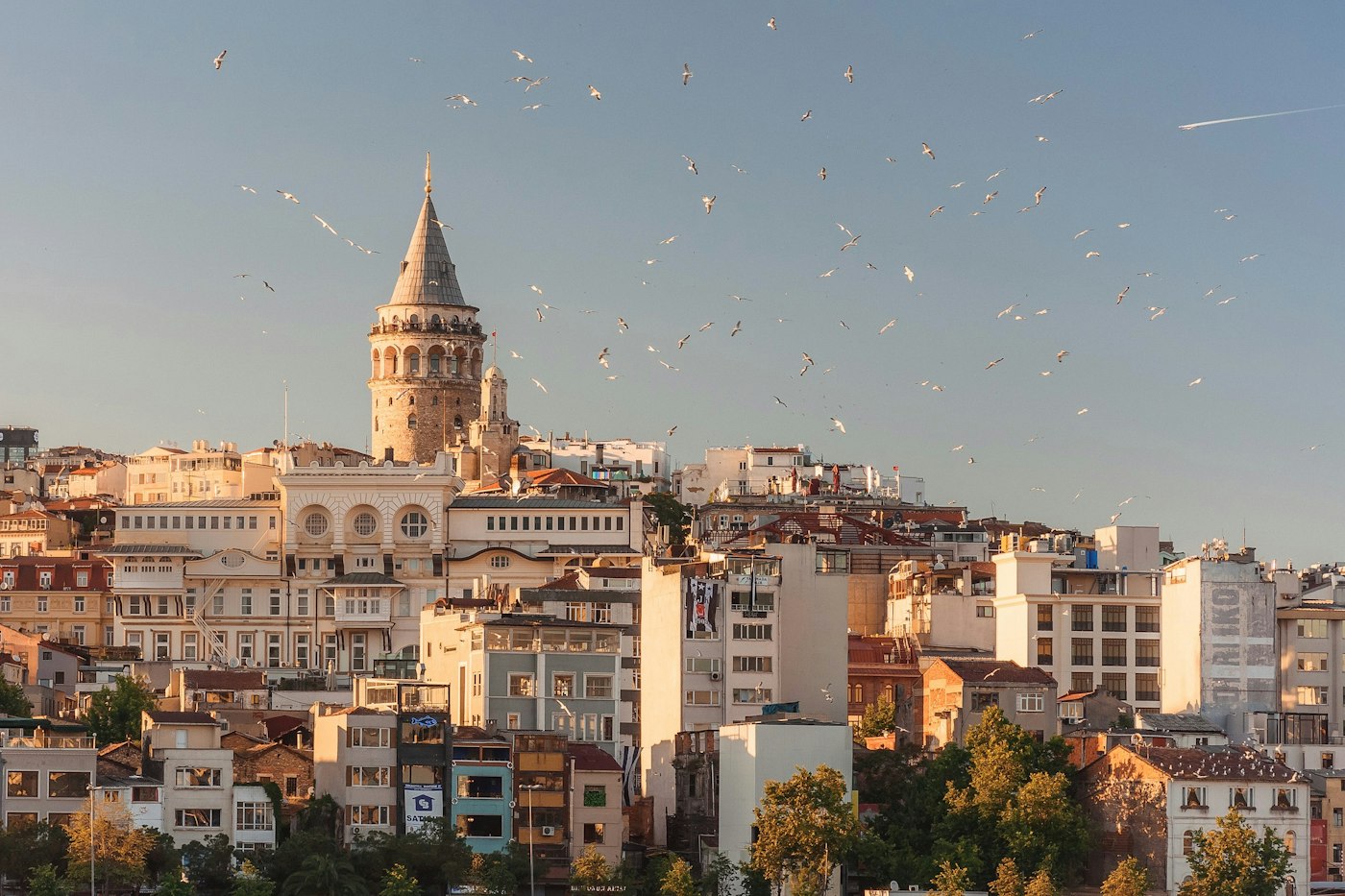
 Days 1–3
Istanbul
Hagia Sophia, the Blue Mosque, Topkapı Palace, the Grand Bazaar, Dolmabahçe Palace, Galata Tower, a hamam and afternoon tea, all with your private guide.

Istanbul’s sultans, Cappadocia’s sunrise balloons, Roman Ephesus, Pamukkale’s white terraces and Pergamon’s hilltop acropolis, in one private or small-group journey from €2,490 per person.


The 13-day Grand Turkey Wonders Tours Package joins four civilisations and five regions on one carefully paced route: Byzantine and Ottoman Istanbul, the lunar valleys of Cappadocia, the Roman cities of the Antalya coast, the thermal terraces of Pamukkale and the Aegean treasures of Ephesus, Izmir and Pergamon. One booking covers hotels, three domestic flights, licensed guides, entrance fees and every transfer.
The journey opens in Istanbul, the only major city on two continents, with a Turkish bath, a full-day walk through Sultanahmet and a day of palaces, towers and afternoon tea at the historic Pera Palace. You then fly to Cappadocia for pottery, a whirling dervish ceremony, a sunrise balloon flight, rock-cut churches, an underground city and a cooking class in a village home.
A second flight brings you to Antalya for the ancient cities of Perge, Aspendos and Side, then the road leads to Pamukkale and Hierapolis before Ephesus, Izmir and the hilltop kingdom of Pergamon. Turkey’s historical and cultural highlights arrive in a logical order, so you spend your time at the sites instead of on the motorway.
Choose a private Turkey tour for your own guide, driver and vehicle and a pace that follows your interests, or a group Turkey tour that follows the same route at a lower price. Both options include the same hotels, flights and entrance fees, and either can be customised with extra nights, different hotels or family-friendly touches.
The History Travel is an Istanbul agency founded in 2007 by two professional guides who wanted to serve travellers first-hand and avoid mass tourism. It holds a 5.0 rating from 33 Tripadvisor reviews, and guests regularly mention detailed itineraries and constant contact through WhatsApp.
Istanbul comes first, so you meet Turkey’s imperial story before you see its landscapes. Cappadocia follows for the unforgettable scenery. The final week shifts to the Roman Mediterranean and Aegean, where Perge, Aspendos, Hierapolis, Ephesus and Pergamon show how the classical world lived.
Three short flights replace long road days. Your own guide and driver make the pace flexible, and boutique hotels in historic buildings give each night its own character.
From the Bosphorus to the Aegean, the route links Turkey’s most distinctive regions by air and by road.
Days 1–3Hagia Sophia, the Blue Mosque, Topkapı Palace, the Grand Bazaar, Dolmabahçe Palace, Galata Tower, a hamam and afternoon tea, all with your private guide.
Days 4–6A sunrise balloon flight, Göreme’s rock-cut churches, Kaymaklı’s underground city, Avanos pottery, whirling dervishes and a village cooking class.
Days 7–12Perge, Aspendos and Side, the Pamukkale terraces and Hierapolis, Ephesus, an Izmir city day and the hilltop acropolis of Pergamon.
If you are searching for a 13-day Turkey itinerary that joins history with culture, this programme covers the country’s greatest sites in a sensible order. It is built around Istanbul, Cappadocia, Antalya, Pamukkale, Ephesus, Izmir and Pergamon. One price covers your hotels, domestic flights, private guided sightseeing, entrance fees and transfers. Open any day below to see every place you will visit, what is included and where you will sleep.
The Turkey tour begins with a private airport welcome and a traditional hamam. Day 2 is a full-day walk through Sultanahmet: Hagia Sophia, the Blue Mosque, the Hippodrome, the Grand Bazaar and Topkapı Palace. Day 3 crosses into modern Istanbul for Dolmabahçe Palace, İstiklal Avenue and Galata Tower, finishing with afternoon tea at the Pera Palace.
A flight takes you to Cappadocia, where you try pottery in Avanos, watch a whirling dervish ceremony, fly over the valleys in a hot-air balloon, visit the Göreme Open Air Museum, Pigeon Valley and Kaymaklı Underground City, and cook with a local family in Ayvalı village.
From Antalya you visit the Roman cities of Perge, Aspendos and Side. Day 9 crosses to Pamukkale via Laodicea and Hierapolis. Day 10 passes through Ephesus on the way to Izmir, Day 11 is a city day, and Day 12 climbs the Pergamon Acropolis. Day 13 is your flight to Istanbul for the journey home.
Every full touring day includes at least four places, led by a licensed English-speaking guide, with time for lunch, photographs and questions. Places marked optional are suggestions and are not included in the price.
Thirteen days, three flights and seven destinations. Tap any day to read the details.
Your Turkish adventure begins with a private airport welcome, a historic hotel and a traditional hamam.
Your English-speaking assistant meets you after customs and hands you to your private driver, who takes you to the hotel and helps with check-in and your welcome pack.
Check in at the 1892 hotel built for Orient Express passengers, where Agatha Christie is said to have stayed. Rest before your first evening in Istanbul.
Visit a 16th-century bathhouse designed by the architect Mimar Sinan. Admission, a traditional body scrub and a soap-foam massage are included.
A relaxed evening stroll past the floodlit Blue Mosque and Hagia Sophia is a gentle first taste of the Old City. Suggested only, not included in the price.
Where you’ll stay: Pera Palace Hotel.
A full-day private walking tour (about 8 hours) through the capital of two great empires, with five major sights in one day.
Istanbul’s Old City skylineBuilt in 537 AD under Emperor Justinian, its vast dome and gold mosaics make it the great meeting point of Byzantine and Ottoman art. Your guide explains its layers of history.
Sultan Ahmed’s mosque has six minarets and more than 20,000 İznik tiles. Beside it, the Egyptian Obelisk and Serpent Column mark Constantinople’s chariot-racing arena.
Home of the sultans for almost 400 years, with courtyards, the Imperial Treasury, the Harem and terraces overlooking the Bosphorus and the Golden Horn.
Wander more than 60 covered streets of ceramics, lamps, leather, textiles and jewellery in a market founded in 1461. Your guide shows you where quality and fair prices are found.
Where you’ll stay: Pera Palace Hotel.
A private 5.5-hour tour of Istanbul’s modern side, from imperial palace to İstiklal Avenue, followed by afternoon tea.
The Bosphorus, between Europe and AsiaThe 19th-century Ottoman palace on the Bosphorus has a crystal staircase and one of the world’s largest Bohemian crystal chandeliers. Your guide tells the last sultans’ story.
Walk Istanbul’s lively pedestrian boulevard with Belle Époque façades, historic arcades, the red nostalgic tram and plenty of cafés, boutiques and bookshops.
Built in 1348 by the Genoese, the stone tower’s balcony gives 360-degree views of the Golden Horn, the Old City skyline and both continents.
Enjoy tea under the domed ceiling of Pera Palace with live piano music. We arrange the reservation and you settle the bill at the venue.
Where you’ll stay: Pera Palace Hotel.
A one-hour flight takes you from the Bosphorus to a landscape of fairy chimneys and cave dwellings.
Göreme’s valleys, CappadociaYour assistant escorts you to Istanbul Airport for the direct economy flight of about one hour. A driver and guide meet you on arrival.
Learn Hittite-era red-clay traditions in a family studio. Try the wheel, see the painters at work and browse the showroom. About one hour.
Check in at a restored Byzantine-era rock-cut hotel in Ayvalı village, with deluxe cave rooms, courtyards and valley views.
Watch a Mevlevi sema ceremony, inscribed by UNESCO, in a Seljuk caravanserai built in 1249. The ritual lasts about one hour.
Where you’ll stay: Gamirasu Cave Hotel.
A sunrise balloon flight followed by a 5.5-hour private tour of Cappadocia’s highlights.
Balloons over Göreme at sunriseFly for about one hour as fairy chimneys glow in first light. Includes a light breakfast, a non-alcoholic toast and a flight certificate. Weather dependent.
A UNESCO World Heritage monastic complex of rock-cut churches with some of Byzantine Anatolia’s best frescoes, explained by your private guide.
Dovecotes carved into the tuff cliffs once supplied fertiliser for the vineyards. The valley is a classic stop for photographs between Uçhisar and Göreme.
Descend through narrow passages to stables, kitchens, chapels and ventilation shafts where early Christians sheltered from persecution.
Where you’ll stay: Gamirasu Cave Hotel.
A slower day built around Turkish home cooking and the village life of Cappadocia.
Wander lanes of cave houses, orchards and old stone fountains in a quiet village away from the main viewpoints.
Cook regional dishes in a local family’s kitchen under the guidance of your hosts. Recipes are shared on request. About four hours.
Sit down to the meal you prepared, in the warm and cosy setting of a traditional village home, with tea to finish.
The highest natural rock in the region gives long views over the valleys. Suggested for free time, not included in the price.
Where you’ll stay: Gamirasu Cave Hotel.
A direct one-hour flight to the Turquoise Coast, with private transfers at both ends.
Drive to Kayseri Airport and take a direct economy flight of about one hour from central Anatolia to the Mediterranean coast.
Check in at the boutique Ottoman-house hotel in Antalya’s old quarter, beside the Roman harbour and the clock tower.
Walk to the marble triple gate built in 130 AD to honour Emperor Hadrian’s visit, then continue to the harbour at sunset. Suggested, not included.
Stroll down to the Roman harbour, where fishing boats and cafés sit beneath the cliffs, for a relaxed first evening on the coast. Suggested, not included.
Where you’ll stay: Tuvana Hotel.
A full-day private tour (about 8 hours) of three Roman cities in ancient Pamphylia.
A major city of ancient Pamphylia with colonnaded streets, a stadium, Roman baths and a Hellenistic gate. St Paul is believed to have preached here.
Among the best-preserved Roman theatres anywhere, with seating for about 15,000 and an original stage building. It still hosts a summer opera and ballet festival.
A harbour town of Greco-Roman ruins, an agora, a theatre and a coastal promenade lined with restaurants. Your guide shows the best photo spots.
Columns on the Mediterranean shore, tied in local legend to Cleopatra and Mark Antony, make a fine sunset photograph at the end of the promenade.
Where you’ll stay: Tuvana Hotel.
A scenic drive across the Taurus Mountains to the white terraces of Pamukkale, with lunch included.
Pamukkale’s white terracesYour private driver and guide take the inland route to western Anatolia, with a lunch stop included during the day.
Explore a biblical city, one of the Seven Churches of Revelation, with a stadium, theatres, colonnaded streets and a large ancient water system.
A Roman spa city built over hot springs. See the great theatre, the vast necropolis and the Antique Pool, where visitors swim among fallen columns.
Calcium-rich thermal water has built gleaming white pools down the hillside. Walk barefoot along the terraces. A UNESCO World Heritage Site.
Check in at a thermal hotel where mineral-rich water relaxes you after a day among the ruins. Standard rooms are included.
Where you’ll stay: Doğa Thermal Health & Spa.
An 8.5-hour private transfer with a guided walk through one of the best-preserved ancient cities in the world.
The Library of Celsus, EphesusWalk the marble Arcadian Way, the Great Theatre and the Roman baths in a city that held about 250,000 people in antiquity.
The restored two-storey façade, begun about 114 AD, is Ephesus’s signature image. Statues of Wisdom, Knowledge, Intelligence and Virtue stand at the entrance.
A pilgrimage chapel on Bülbül Hill, where Mary is believed to have spent her last years. Christians and Muslims both visit it.
The basilica marks the traditional burial place of the apostle John, below Ayasuluk Hill’s Byzantine citadel, before the drive to Izmir.
Where you’ll stay: Key Hotel.
A relaxed half-day city tour (about 3 hours) and a fine-dining evening.
Start at the 1901 Ottoman clock tower, Izmir’s emblem, beside the Konak Mosque and the busy seafront.
Walk colonnades and vaulted arcades of the Roman marketplace, now the Open Air Museum of Izmir, at the foot of Pagos Hill.
A 1907 tower lift connects the seafront with the hillside above and gives panoramic views over the bay and mountains.
An 18th-century caravanserai whose 4,000 sqm courtyard is now a lively bazaar with souvenirs, handicrafts and Turkish coffee.
Refined Italian cuisine recognised by Michelin and Gault & Millau. We arrange the reservation and you settle the bill at the restaurant.
Where you’ll stay: Key Hotel.
A full-day private excursion (about 8 hours) to Bergama and its hilltop kingdom.
One of the Roman world’s leading healing centres, where the physician Galen practised in the 2nd century AD. Walk its sacred way and healing tunnel.
The royal hilltop capital of the Attalid kings, with palaces, the Library and the sanctuary of Athena, above the town of Bergama.
The temple dominates the summit, with colonnades and views of Bergama. The great altar’s foundations remain, while its frieze is in Berlin’s Pergamon Museum.
One of the world’s steepest ancient theatres, with terraces that fall dramatically to the valley below. Walk the steps or sit and take in the view.
Where you’ll stay: Key Hotel.
Final private transfers and a one-hour flight to Istanbul for your onward journey.
Your driver and guide collect you from the Key Hotel for a smooth transfer to Izmir Airport, with help at check-in.
A direct economy flight of about one hour, with time to connect to your international flight home.
Add nights in Istanbul, a Bosphorus cruise, Gallipoli or a Mediterranean beach stay. Our team arranges every detail.
Read ahead about what you will see on this tour: the history, the culture and the reason each place matters, with practical local tips from our guides.
Justinian’s great church was the largest cathedral in the world for almost a thousand years, then an imperial mosque, a museum, and a mosque again. Its dome, minarets and mosaics sit together in one building.
Nearly 1,500 years of history under one dome.
Built between 1609 and 1616, the Blue Mosque is the last great imperial mosque of the classical age. Outside, the old Hippodrome holds monuments from Egypt, Delphi and Byzantium on one stretch of ground.
Monuments from several civilisations on one square.
The Grand Bazaar began as a Byzantine-era trading hall rebuilt by Mehmed the Conqueror and grew into a covered city with thousands of shops, mosques, fountains and cafés.
One of the world’s oldest covered markets.
From the 1460s until the 19th century, the Ottoman Empire was governed from these courtyards. Its pavilions hold the Spoonmaker’s Diamond, imperial robes and relics, and its terraces give the finest views over the Bosphorus.
The command centre of the Ottoman world.
Completed in 1856, Dolmabahçe replaced Topkapı as the imperial residence. Its neoclassical façade faces the Bosphorus, while the interiors mix European and Ottoman taste on a lavish scale.
Where the Ottoman era met modern Europe.
İstiklal Avenue is the cultural spine of modern Istanbul. Embassies, passages, churches and music venues line it, and a vintage tram runs from Taksim Square to Tünel.
The city’s modern face at street level.
Galata was a Genoese colony on the north shore of the Golden Horn, and its tower was the colony’s watchtower and landmark. Today it is the best vantage point for Istanbul’s domes and minarets.
The classic panorama of Istanbul.
Çemberlitaş Hamamı was built in 1584 to a design by Mimar Sinan, the chief architect of the Ottoman Empire. Its domed marble hall and central heated stone have served bathers for over 400 years.
A living piece of Ottoman daily life.
The Kubbeli Lounge keeps the elegance of a historic literary café, with a dome, parquet floors and tall windows. It continues a ritual long favoured by Istanbul’s elite.
A civilised pause at the end of the Istanbul days.
Local tip: Wear comfortable shoes for cobbles and bring a scarf for mosque visits. Start early to avoid queues at Hagia Sophia and Topkapı.
Hundreds of balloons rise over Göreme each morning. Flights depend on wind, and cancellations are decided by the aviation authorities, so we keep your schedule flexible.
The signature Cappadocia experience.
Göreme was a monastic centre from about the 10th century. Churches such as the Dark Church preserve vivid frescoes inside chambers carved from soft volcanic tuff, and the site was listed by UNESCO in 1985.
The heart of Cappadocia’s Christian heritage.
Villagers carved thousands of pigeon houses into the cliffs, collecting droppings to fertilise vines and orchards. The valley is a beautiful viewpoint with short, easy paths.
Farming history written in the rock.
Kaymaklı reaches several levels below the surface, with rolling stone doors, communal kitchens and storerooms. It shows how ordinary families protected themselves in difficult times.
A whole town built beneath the ground.
Avanos sits beside the Kızılırmak, whose red clay has supported potters for around four thousand years. Your hands-on session ends with tea and a look at the family’s painted ceramics.
A living craft rooted in Hittite times.
Sarıhan is a stone caravanserai on the old Silk Road. Under its vaulted hall, dervishes in long white skirts turn to Sufi music in a ritual symbolising the soul’s ascent toward perfection.
A solemn, beautiful piece of Turkish heritage.
You learn hands-on techniques for classic Anatolian dishes in an authentic village home, guided by the family who cooks them every day.
Learn Turkish cuisine from a local family.
Local tip: Dress in layers for dawn and wear grippy shoes on rock paths. The Kaymaklı tunnels are low, so tell your guide if you prefer to skip them.
Kaleiçi is Antalya’s walled old town, a maze of restored Ottoman houses, small museums and courtyard restaurants above the old harbour.
Sleep inside Antalya’s historic core.
Perge dates back to the Bronze Age and flourished under Rome. Its long colonnaded avenue, huge stadium and twin-towered gate are among the best preserved in Turkey.
A first look at the classical Mediterranean.
Built under Marcus Aurelius, the theatre’s acoustics are famously excellent. The International Aspendos Opera and Ballet Festival has staged performances here since 1994.
The Roman theatre that still performs.
Side was a rich trading port and slave market in antiquity. Today its columns, gates and temples stand beside beaches and the modern resort town.
An ancient harbour beside the sea.
The temple’s standing columns, partly restored, frame the sea and the sky. It is the best-known image of Side, and the romantic legend adds to its charm.
The classic Side sunset.
Local tip: Summer afternoons are hot, so we visit the ruins in the morning and finish at the shore. Bring a hat and water.
Laodicea was a wealthy trading city on the road to Ephesus. Excavations have restored sections of the main street, the Syria Gate and a monumental fountain.
A rich city still being uncovered.
Founded in the 2nd century BC, Hierapolis grew as a health resort. Its necropolis holds over a thousand tombs, and the thermal springs still flow.
Roman spa culture preserved on a hilltop.
Pamukkale means “cotton castle”. The water leaves white calcium carbonate that forms terraces, and Pamukkale and Hierapolis were listed by UNESCO together in 1988.
A natural wonder of white stone.
The hotel uses local thermal water in its pools. Many guests swim in the evening after the ruins have emptied.
A restful end to a full day.
Local tip: Bring a swimsuit and a towel for the Antique Pool, and sandals for the terraces, where shoes are removed.
Ephesus was the Roman capital of Asia Minor and one of the Mediterranean’s great ports. UNESCO listed it in 2015, and it ranks among the best-preserved ancient cities anywhere.
A Roman metropolis you can walk through.
The library was built as a tomb and monument for Gaius Julius Celsus Polemaeanus and once held thousands of scrolls. Its façade was carefully reassembled in the 20th century.
The most photographed monument in Turkey.
A small stone house in pine woods has been honoured since the 19th century, when it was identified from the visions of a German nun. It is a place of calm.
A quiet pilgrimage stop.
Emperor Justinian built the great basilica in the 6th century over the tomb of John. The ruins show its domes, marble columns and baptistery.
A major early-Christian site.
Local tip: Ephesus is open and shadeless, so go early and carry water. The marble can be slippery, so wear flat shoes.
The tower stands in Konak Square and was built to mark Sultan Abdülhamid II’s 25th year on the throne. It remains the city’s favourite meeting place.
Izmir’s emblem in the heart of the city.
The Roman agora was rebuilt after the earthquake of AD 178, and its arcades give a sense of daily life in ancient Smyrna.
The ancient heart of old Smyrna.
The Asansör was built to spare residents a steep climb, and its terrace now has a café and sweeping views over the gulf.
A neighbourhood landmark with a view.
The han was once an Ottoman inn for merchants. It now fills with the sounds and scents of Izmir’s Kemeraltı bazaar.
The heart and soul of Izmir.
Scappi serves house-made pasta, seafood and seasonal dishes in an elegant room. It is a memorable way to mark the end of the journey.
A fine-dining evening in Izmir.
The Asclepion offered baths, mud treatment, dream interpretation and theatre as therapy. Galen, born in Pergamon, became the Roman world’s most influential doctor.
Ancient medicine in a sacred landscape.
Under the Attalid dynasty, Pergamon rivalled Alexandria in learning and art. Its Library reputedly held over 200,000 scrolls.
A kingdom above the clouds.
Trajan’s temple was completed under Hadrian. Nearby, the altar of Zeus, one of antiquity’s great sculptural monuments, now stands in Berlin.
The summit of a royal city.
The theatre seated around 10,000 and is cut into the hillside at a startling angle. It is one of the most photogenic places on the tour.
A theatre perched on a cliff.
Local tip: Pergamon’s acropolis is steep, so tell your guide if you would prefer the shorter route. Visit Kemeraltı Bazaar in the afternoon when it is livelier.
Hagia Sophia, the Blue Mosque, Topkapı and Dolmabahçe are walked with a private licensed guide who links Byzantine and Ottoman history into one clear story.
Float over fairy chimneys at dawn, descend into Kaymaklı’s underground city and sleep in a restored cave hotel in Ayvalı. This is the highlight of the trip for many guests.
Cook with a village family, throw clay in Avanos, watch the Mevlevi sema and soak in a 16th-century hamam. These are experiences you take part in, not only sights.
Perge, Aspendos, Side, Laodicea, Hierapolis and Ephesus bring together some of the best-preserved Roman ruins in Turkey in a single route.
Bathe among fallen columns in the Antique Pool at Hierapolis and walk barefoot on the UNESCO-listed travertines of the Cotton Castle.
Your own guide, driver and airport assistant are with you on every touring day, so lunch stops, photo time and pace stay flexible.
Best for:
IstanbulPamukkaleEphesusBosphorusEvery night is on a bed-and-breakfast basis in rooms such as Deluxe Pera Rooms, Deluxe Cave Rooms and Sea-View Rooms. Hotels are subject to availability and may be replaced with similar-standard properties.
A landmark of 1892 in Beyoğlu with Deluxe Pera Rooms, Kubbeli Lounge and Orient Express heritage.
A restored Byzantine-era rock-cut hotel in Ayvalı village, with deluxe cave rooms and valley views.
Boutique Ottoman houses in Kaleiçi, steps from the old harbour, Hadrian’s Gate and restaurants.
A thermal hotel where guests swim in mineral water after a day among the ruins. Standard rooms.
A seafront hotel with sea-view rooms on the Aegean coast, close to the bazaar and promenade.
Cave rooms involve steps and uneven floors. Tell us about mobility needs when you book and we will choose rooms to suit.
One price per person covers the whole 13 days. Prices are on a twin-share basis and are a market-based estimate for this itinerary: comparable private tours of Turkey of this length and hotel level typically sit between about €3,000 and €5,000 per person. Your final quote is confirmed when you inquire, as it depends on dates and hotel availability.
Cancel free up to 48 hours before the tour date. Cancellations inside 48 hours are non-refundable.
Visa, Mastercard, bank transfer and PayPal. Send an inquiry first if you would like to confirm dates before reserving.
Practical suggestions based on the route and the way the itinerary is paced.
April to June and September to October give mild weather, clear Cappadocia mornings and thinner crowds. July and August are hot at Ephesus and Aspendos.
Wind cancels some flights. Tell us if you want an extra morning in Cappadocia so a cancelled flight can be rebooked.
Marble in Ephesus, cobbles in Istanbul and rock paths in Cappadocia all favour flat, grippy shoes over sandals.
Visit Hagia Sophia and Ephesus first thing, Aspendos and Side at golden hour, and shoot Cappadocia’s valleys at sunrise.
Cave hotels, Hierapolis and Pergamon involve steps and slopes. Tell us about mobility needs and we choose rooms and routes to suit.
A Turkish e-Visa is available online to many nationalities. Check requirements for your passport before you book flights.
Local tip: keep your passport, flight confirmations and a light layer in your hand luggage for the three domestic flights.
Visa requirements depend on your nationality. Many travellers can apply for a Turkish e-Visa online before they travel, but you should check the current rules for your passport.
The tour can be adapted: add nights in Istanbul, swap hotels, extend to Gallipoli or Bodrum, or add family activities. Tell us what matters and we will rebuild the days around it.
Founded in 2007 by professional guides, our agency designs each itinerary around you and adjusts it on request.
Guests praise how closely we keep in touch before, during and after the trip.
Every guided day is led by a professional, licensed English-speaking guide.
A detailed itinerary is confirmed in advance, with transparent pricing and a free 48-hour cancellation.
These short excerpts come from guest reviews of The History Travel on Tripadvisor. Each links to the full review. Read all reviews on Tripadvisor
“He knows Turkey well, provided detailed itinerary unlike other travel agents.” Read full review
“Mr. Sebahattin and his staff delivered an absolutely amazing service.” Read full review
“He was very friendly and very knowledgeable. All the service was very well organized.” Read full review
“They were hosts showing the beauty of their country.” Read full review
“The trip was well organized by the tour operators. Also it was budget friendly.” Read full review
“Our tour organizer Mr. Sebahattin was very professional in his services.” Read full review
“Our trip was customised to our ask and Sebahattin extended all the hospitality.” Read full review
“The English speaking guides organised by him were very knowledgeable and friendly.” Read full review
Have questions, or not ready to reserve yet? Send us a message and we’ll reply within a few hours.
Choose private or group, select your tickets, and provide your details. We’ll confirm availability within a few hours.
Free cancellation up to 48 hours before the tour date. Cancellations within 48 hours are non-refundable. Date changes are accommodated subject to availability.
Compare other private and group routes from The History Travel, from short city breaks to the grand 18-day circuit.
Istanbul, Cappadocia, Pamukkale, Ephesus and Antalya on a classic circuit.
Explore TourThe longest, deepest private journey through Turkey’s highlights.
Explore TourTen days with Istanbul at the centre and small-group comfort.
Explore TourThe short version: Istanbul’s icons plus Cappadocia’s balloons.
Explore Tour